
Learning Can’t Wait · Episode 127
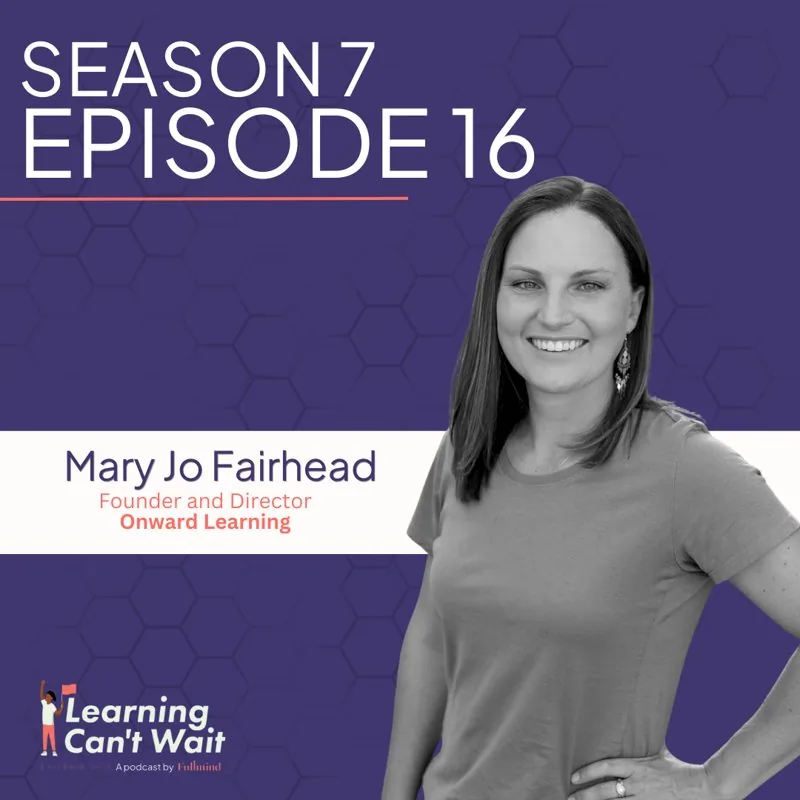
Mary Jo Fairhead: Onward Learning, Rural Education, Student-Centered Learning
- Mary Jo Fairhead
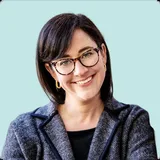 Hosted by Hayley Spira-Bauer, Chief Academic Officer at Fullmind
Listen now
Mary Jo Fairhead: Onward Learning, Rural Education, Student-Centered Learning
Episode summary
Mary Jo Fairhead, founder of Onward Learning in South Dakota, grew up in a tiny country school and later taught at one of the state's largest high schools. As a principal on the Pine Ridge Reservation, she delivered meals across a vast rural area and burned out under testing mandates in a community facing poverty and high youth suicide rates. She then opened a micro school built on love rather than fear: personalized pacing, no standardized tests or homework, daily outdoor time, Lakota language and culture, and a family-like community.
Key takeaways
- Over-testing low-scoring schools took five to six weeks a year away from students who needed connection most
- Onward Learning replaces fear-based compliance with a love-based environment, 12-to-1 ratios, and no homework
- Outdoor time is a right, not a privilege: an hour minimum daily, even at minus three degrees
- A Lakota language and culture SEL curriculum written by her great aunt anchors identity and wellbeing
- Progress is tracked by where each child actually is, not test scores; parents and students tell the story
About this episode
In this episode of Learning Can’t Wait, we sit down with Mary Jo Fairhead, Founder and Director of Onward Learning, to explore the unique strengths of rural education and the importance of redefining student success. Mary Jo shares how small, tight-knit communities foster deep collaboration and resourcefulness, creating learning environments where students can thrive at their own pace. She challenges the overreliance on standardized testing, offering real-world examples of students excelling when given the freedom to progress based on their individual needs rather than rigid benchmarks.
Host Hayley Spira-Bauer and Mary Jo discuss the broader implications of rethinking traditional educational norms, from the role of homework to the fear-based mindset that often dictates student progress. With a refreshing perspective on what truly matters in learning, Mary Jo encourages educators to be courageous in advocating for student-centered approaches. Tune in for an inspiring conversation that challenges assumptions and highlights the power of community-driven education.
Episode notes
Mary Jo Fairhead never set out to disrupt traditional education. Yet, in her work with rural schools, she has found herself at the forefront of a movement that challenges conventional wisdom about learning, success, and standardized assessment. Through collaboration, resourcefulness, and an unwavering belief in student potential, Fairhead is helping redefine what it means to succeed in school through Onward Learning.
In many rural communities, schools operate as more than just educational institutions; they are the heart of the community. Fairhead has witnessed firsthand the power of these tight-knit environments, where teachers, parents, and students come together in ways rarely seen in urban settings. “I feel so honored to be able to work in so many rural school districts,” she shares. “The absolute collaboration that happens is unlike anything else.” This sense of connection creates a space where innovation flourishes and where students are encouraged to learn in ways that make the most sense for them.
One of the most profound shifts Fairhead has embraced is moving beyond standardized test scores as the primary measure of student success. “I have students in eighth grade doing high school math, and I have students in eighth grade doing sixth-grade math. And that’s totally fine,” she explains. The focus is on ensuring students build strong foundational skills rather than forcing them into a rigid curriculum that doesn’t account for individual learning needs.
Rather than relying on test scores, the effectiveness of this approach is best conveyed through the students and families themselves. Fairhead recalls a letter from a parent whose children had been in her program for just a few weeks. “It was a powerful testament to what we’re doing—not just academically, but socially and emotionally.” In a world that often values metrics over meaningful growth, these stories stand as proof that student-centered learning works.
This shift in mindset extends beyond the classroom. Fairhead believes that we must rethink the benchmarks we use to evaluate education. “Who created these tools? Who were they meant for? And why do we assume they are what’s best for everyone?” she asks. The traditional approach to assessment often fails to capture the full spectrum of student strengths, reinforcing outdated definitions of success. By stepping away from a one-size-fits-all approach, educators can unlock the unique genius within each student.
A key element of this philosophy is embracing real-world learning. At Fairhead’s school, students cook, bake, and engage in hands-on projects that teach practical skills while reinforcing academic concepts. One day, a student may be reading a recipe aloud to practice literacy skills; another day, they may be calculating ingredient proportions to strengthen their math abilities. These experiences create a deeper, more meaningful connection to learning—one that lasts far beyond the classroom.
As the conversation around educational reform continues, Fairhead offers a simple but powerful piece of advice to teachers entering the profession: “Be courageous.” In a field often shaped by tradition and rigid expectations, taking a bold step toward student-centered learning can feel daunting. But, as she reminds us, “Your courage is lowering the cost of courage for everyone else.”
By fostering a more flexible, student-driven approach to learning, rural schools are proving that success is not about test scores or arbitrary benchmarks—it’s about growth, confidence, and the ability to thrive in the real world. And in that sense, they are leading the way for education everywhere.
Full transcript
Transcript generated from the recording; minor errors may remain.
Hayley Spira-Bauer: Welcome to the Learning Can't Wait podcast of Fullmind. At Fullmind, our vision is to ensure every child has access to an exceptional education. Each episode, we will be joined by Pathfinders within and around the education space who are bringing about transformational change. On behalf of deserving students, I'm your host, Hayley Spira-Bauer. Our welcome back, everybody to the Learning Can't Wait podcast. We have an incredible educator here with us today we have Mary Jo Fairhead, the founder of Onward Learning. Mary Jo, welcome.
Mary Jo Fairhead: Thank you. I'm happy to be here.
Hayley Spira-Bauer: I'm so excited for you to be here. It is truly exciting for me when I get to meet folks who are doing work that thinks about how we teach and learn differently than the way that we conventionally do so here in the United States. So eager to dive in with you and have you start off by telling us how did you come to be the personal and professional version of yourself, Mary Jo?
Mary Jo Fairhead: It's been a journey to say the least. My journey, I guess started as a student in a really small country school. They call 'em here in South Dakota, in Interior South Dakota. I went to a school, I think there were 56 kids, kindergarten through eighth grade. Graduated with four in my eighth grade class and just grew up with a really tight knit little school community. And I assume that's how everybody grew up until I went to college and I was going to be a teacher and I volunteered at the local high school to tutor. And what I found there was not what I experienced. It was a very large high school. And of course, those that I was tutoring were students that had fallen behind or they were really struggling. And that was kind of my first glimpse into kids falling through the cracks as from the teacher side of things. ([02:12](https://www.google.com/url?sa=E&q=https%3A%2F%2Fwww.rev.com%2Ftranscript-editor%2Fshared%2F2MykVbQTDovJsXrZpo3m8ql4Q1GqUmxcYhaKQ8IuP4jDX3IgPmPk2OdFbR3yNyjMrwZ6tIObcru--olGTVabN7tJsYM%3FloadFrom%3DDocumentDeeplink%26ts%3D132.81)): So I guess, I think it was about 19 years old when I had that experience. And I remember even going home then and thinking, man, there's just a lot of kids falling through the cracks here, and I think I need to start a school. Of course, at 19 years old, I didn't know what that would look like, and that seemed crazy, but it had entered my mind at that moment. And then fast forward a few years, I graduated college and started my first job as a high school social studies teacher. And again, I taught at one of the largest high schools in the state, and I had think seven periods of up to 30 kids in each period. I loved my job, I had great support, but that personal connection missing because I just had so many students and I knew I couldn't get to know them on a deep enough level to understand their needs and to really serve them in an impactful way with that many kids, it was really hard. ([03:13](https://www.google.com/url?sa=E&q=https%3A%2F%2Fwww.rev.com%2Ftranscript-editor%2Fshared%2FFNRWSU8kOCxq8gGzjmgQWgQl9JE1a1gTFzmbh55WXujR0B9edStq58ceMfDDaCMpszZlwDJeOfobIPpWOhIJeu2383c%3FloadFrom%3DDocumentDeeplink%26ts%3D193.96)): So I ended up, I was there for about three years, and then I got married and I moved home. So I grew up on the Pine Ridge Reservation and I'm a member of the Oglala Sioux Tribe, and that's where I moved back to teach. And the school that I left, I went to high school, the school I went to teach at, it's not the school I returned to, and there was just so much more emphasis on testing and compliance over connection and just a lot of things that were just weighing on me. So I ended up quitting and I took a year, I took two years off, and I then got a phone call from my former colleague who was the principal at a school that I had also taught at on the reservation when I moved back. And she said she was resigning and she was retiring, and she asked if I would apply to be the principal of the school. ([04:17](https://www.google.com/url?sa=E&q=https%3A%2F%2Fwww.rev.com%2Ftranscript-editor%2Fshared%2FmUG8CTTX06MKnrXsE9xgVzvdzrK3EV9ekjwjSiaIcB0fkFN4XNC_aP2VuYO2DaYa8iM3QSIC6NuAUEErudOc2b3T9JU%3FloadFrom%3DDocumentDeeplink%26ts%3D257.05)): And so I went from not teaching at all for two years. I did teach at the local tribal college part-time, but I wasn't in the public school system to applying to be a principal. And I ended up getting the job. So I dove back in head first, both beat. And I was really excited though as a principal, I felt like, you know what? I'm going to be able to serve my teachers in a way that makes them feel fulfilled at their job. I'm going to be able to make this a place that kids want to be, and I'm going to be able to make decisions that need to be made to make that happen. And for the most part, I had pretty good support, but again, I was faced with, so our school district, because of our test scores, we were required to test more because our test scores were lower. ([05:11](https://www.google.com/url?sa=E&q=https%3A%2F%2Fwww.rev.com%2Ftranscript-editor%2Fshared%2F4nx75Aohu_S6f0Ui33HBGISksNiTDYw1rIVyspW6ltINwScNoWN9Ai2TmlPnIpH2ij5DprtZMQxwxCT2XfZBkNB57xw%3FloadFrom%3DDocumentDeeplink%26ts%3D311.08)): And so our kids were testing anywhere from five to six weeks out of the year plus weekly progress monitoring just to prove that our teachers were doing what they needed to be doing, even though I knew I had some of the best teachers in the state that I had ever worked with. And so that was really, really hard. We also come from an area that's one of the poorest in the nation. So along with that comes a lot of trauma, a lot of addiction issues. We have, I think the suicide rate for children in our area is three times the national average. So dealing with a lot of those social issues and home life issues, while the emphasis from the state was to increase our test scores. And so again, I felt like I was being sort of torn apart because I knew what was best for my kids and my teachers. ([05:59](https://www.google.com/url?sa=E&q=https%3A%2F%2Fwww.rev.com%2Ftranscript-editor%2Fshared%2FZN1J6h3B_JR3ELDOptf6zWMqofdIyyvZMyhEolLbuxEUI0GbcH2RX2r1o1ZjibzPNTsf_n2LFeuNzU81WbH1RD3lvSg%3FloadFrom%3DDocumentDeeplink%26ts%3D359.21)): But on the other hand, I had these, my bosses essentially telling me I had to do things that didn't seem right or at least just focus my energy on things that I didn't feel was real impactful for my kids. So anyways, I was there for two years and my last year there was when Covid hit. So I was a principal during the pandemic in a very isolated area, like I said, low income. So I pretty much spent my entire day for 13 months while the kids weren't in the building, making sure that meals were delivered to each home. I think our district traveled like 6,000 miles a day or something like that, delivering meals just because we're so, like I said, so rural, so isolated children live clear out in the middle of pastures and in the middle of nowhere. And then just making sure that we delivered hotspots to every home to make sure that they could get online. And then some homes would have 10 children in the home all trying to get online at the same time and do their homework. And it was beyond difficult and beyond heartbreaking, but we did the best we could, and I had great support with my staff. We kept in touch with our kids the best we could. But by the time I got through that, I honestly was, I was burned out. ([07:23](https://www.google.com/url?sa=E&q=https%3A%2F%2Fwww.rev.com%2Ftranscript-editor%2Fshared%2FG-RtEqCwGShITew9P4WUti-56yGOcuaxnI9dRmXA63Mb6VXlQqyBciPU_ZmPU3MIZZwxdVEcSvdlpslW09Eyd68bJok%3FloadFrom%3DDocumentDeeplink%26ts%3D443.34)): I wanted, I yearned for that school environment that I grew up in to not only teach in it, but to have it for my community and for my own children. So I was talking to a guy at the time, we weren't friends, I just met him. David Richards had started some charter schools in California, and he'd been pretty successful at that. So I met him through a friend of a friend, and I just wanted to pick his brain. And he just, out of the blue, he asked me, he said, if you could do anything, if money wasn't an issue, if you could do anything, what would you do? And I said, well, I'd quit my job and I'd start a school. And I laughed. I was like, but that's crazy. I can't do that. And he said, wait, is it crazy? I feel like you could do that. ([08:04](https://www.google.com/url?sa=E&q=https%3A%2F%2Fwww.rev.com%2Ftranscript-editor%2Fshared%2F3Hbk9OyJ1zdztO0SJV0yikZUukwiqZRQtQn47h-L1dnuNcQDekseqLlmAjxRXDg0Vnwre7_b-zUVMbNLBufysEioHVw%3FloadFrom%3DDocumentDeeplink%26ts%3D484.07)): I was like, ah. So long story short, about a month later, I put in my resignation and started working on Onward Learning with David's help. And I guess the rest is history. I got a team together of teachers that had worked for me and some parents in the community, a grandmother, my best friend who runs a Montessori program on the reservation. And we started working away at the mission, the vision, the values, what we wanted Onward to look like. And then we opened, I think it was about nine months later with our summer program. And that's, I guess the story of how I am where I am in a nutshell.
[08:00] **Hayley Spira-Bauer:** That is incredibly powerful. Mary Jo, what I appreciate about people like you is how you really are relentless in achieving what you know is right for kids. And so I'm really eager to continue to dive in and have you tell your story and amplify that story because it is unequivocal how deeply passionate you are about this work. So on your website, you have a section that says, what's the difference between mainstream education and onward learning? Can you tell us in your own words, what is Onward Learning doing and how is it doing it?
Mary Jo Fairhead: So academically, it's very personalized. We teach all the core subjects, but it varies child to child. We have neuro divergent learners, ADHD, autism, dyslexia. We have general education students and anywhere in between and beyond. And so a big part of what I wanted to do is to personalize their learning based upon their strengths and their interests, but also to allow children to go at a pace that suits them developmentally and emotionally and mentally. And that has reduced the anxiety and depression in some of our students that have come to us tremendously. The other, I guess some of the other differences, a big thing that I found when I was teaching in a principal in the mainstream system is that there was a huge emphasis on fear-based tactics. So we're going to, if you don't do this, this will happen. And I just found that to be very detrimental to the mental health of not only my kids, but my teachers. ([10:31](https://www.google.com/url?sa=E&q=https%3A%2F%2Fwww.rev.com%2Ftranscript-editor%2Fshared%2FN6cDe9uoOXbNFakLx4KBCdCnhVFfYQpfVP-0yK1DCDwX6kRy65FxQspAdvL4VOdVD9pkpiT1D2AjwBGbYHb8WtnLhVg%3FloadFrom%3DDocumentDeeplink%26ts%3D631.23)): That's a lot of pressure when you go into teaching. Most of the time you're a very empathetic and caring person. And when you're forced to bribe children to be good or to do good on tests or all of those things, that doesn't feel good and it's not good for anybody. So we flip the script and instead of fear-based environment, we call it a love-based environment. And that came from Philip Moore, who was the director of a school in Michigan, Upland Hills, and he's been a very amazing mentor too. And Upland Hills is a really cool school, but so love-based versus fear-based. We don't do any standardized testing at all. Our class sizes are 12 to one at the most, so we know where our kids are and what they need. We don't need a test to show us that. And not only that, I just have never found a test that really shows me what kids know. They're never as accurate as you hoped. So we stay away from that recess. An outdoor time and physical activity are seen as a right, not a privilege. They're outside a minimum of an hour every day, and that's just cold days. Usually it's more like two hours. And even in the winter, we have snow on the ground. We had a high of negative three the other day, and the kids bundle up and they love to be outside.
[10:00] **Hayley Spira-Bauer:** I literally just had this conversation with my boys. We have a lot of snow here in New York right now, and they're like, we just want to go out at recess. I was like, I wish I could teach your school. There's no bad weather. There's just bad clothes.
Mary Jo Fairhead: Yep, exactly. And even the teachers, it forces us to get outside. We all have snow pants and gloves and everything. We bundle up. We have the golf courses pretty close by and they let us go sled their hills. And so we go and take the sleds and we go sledding, and it's a lot of fun. Another big difference is we don't do homework. I firmly believe that we don't send work home.We tell adults to leave work at work. Why not kids?So
Hayley Spira-Bauer: You could see me, if you could see me right now, for the folks that are just listening, I'm raising my hands in the air. There is no definitive research that homework is beneficial for kids under high school age, and you're primarily serving, you are serving kids eighth grade and below, so this is your target demographic. I do fear sometimes my boys are going to go to their public school and just rabble rouse the way I rabble rouse at home. But you know what? Never stopped me.
Mary Jo Fairhead: Yeah, it is what it is.
Hayley Spira-Bauer: Mary Jo, you're living a dream here. I'm being jovial and I'm smiling, but I want to just stop for a second and really hone in on what I believe to be one of the more impactful things that you've said here today, which is that the suicide rate of the students in your community is extremely high. And the mental health of students in your community for a variety of issues that you named at the top of our conversation is higher than the general population. And thus you've identified along with some other really smart people who you're working with that what we're doing is obviously not working. And so your approach of love-based instead of fear-based is having an impact on these students. That is incredible.
Mary Jo Fairhead: Thank you. It's very, very rewarding to finally be able to do what I knew needed to be done for the kids.
Hayley Spira-Bauer: Yeah. So talk to me a little bit about the pedagogy that you developed. Obviously you have a ton of school-based experience. Are you also working with other outlets, like mental health professionals? How are you integrating the best of the best in terms of building what you're building?
Mary Jo Fairhead: I should have a PhD in curriculum research at this point. I love it. I love it. The National Microschooling Center has been a great resource. They've connected us with a lot of amazing people doing amazing things. We use some project-based learning like Rock by Rock and then the mental health side of things. So I have a mother who, her child goes to Onward Learning. She's a mental health therapist, and so we have her to lean on. And then my great aunt actually developed a curriculum. It's a social emotional learning curriculum that's centered around the Lakota language and culture, which is our indigenous culture. And so we're incorporating that and teaching the language and the culture alongside the social emotional learning in a way that all of us can learn from, but especially our children in our area. It's a part of our identity and who we are. So that's been impactful. And then just leaning on the community and the parents and asking, what do our kids need? What do you need? And what does that look like?
[15:00] **Hayley Spira-Bauer:** You've masterfully highlighted a large part of what culturally competent education looks like, which is leaning on the community and the families and the people instead of just on what pedagogy tells us from a textbook. Right. Can you talk a little bit more for those that are unfamiliar with working on a reservation or with families from a reservation, what else you incorporate to ensure that you are having the kids show up as their authentic selves and how you honor that in your classrooms? Well, your classrooms being the term in your community, in your space, in your schooling.
Mary Jo Fairhead: We have a real strong emphasis at our school on the creative side of the brain for one, and just allowing creativity to flourish. I've seen time and time again the most creative children, whether it's music, art or acting or all of the above, those creative instincts and those creative talents being crushed. And so allowing space for children to just be kids for one, but to be able to tap into that side of themselves has been pretty impactful. And then just culturally, we are a pretty small community, and my whole goal with Onward was to create more of a family environment than a school environment. And so when the children come in, they know that they're loved and they know that they don't have just their family at home, but they have this whole extended family as well of other kids and other parents and other community members and their teachers and just everybody as a whole. And that's true for us as adults too. I wanted my own community, to be honest. I wanted people to lean on because as a leader, a lot of times you're not looked at as somebody that needs that connection. You're looked at as somebody that needs to just lead. So I have personally been able to gain a lot from those connections and that those relationships too.
Hayley Spira-Bauer: That's really beautiful. I have hosted a mini series on rural education here on the podcast. And as someone who grew up in suburbia and went to college and worked only in an urban setting and only have ever worked in urban schools, I was woefully ignorant of the beauty and resourcefulness that comes from rural America. And I feel so honored to be able to work in so many rural school districts as part of my job with Fullmind, but also to just be a learner in this space because of just the absolute collaboration that happens in a way that I don't believe happens in other types of communities. And it sounds like you're calling that out both as a personal benefit, but as a community benefit at your school. And I'm on my learning, not my experience about rural schools in America and the resourcefulness that comes of necessity. So Mary Jo, a large part of education is to talk about how do you know that this is working? How do you know this is impactful? And you mentioned yourself that you're not using standardized tests as a benchmark to demonstrate impact. How do you personally convey the effectiveness of this model when you're talking to other people or even talking to families that are interested in joining the community
Mary Jo Fairhead: When it comes to other families joining? The best way to convey that message has been through our children and our other families. They're the ones telling the story. I'm not, and that's, I think, more powerful than anything. Same goes for when I'm talking to people asking, how impactful is this? I have a letter that one of my parents wrote last year after her children had been with us maybe a couple of weeks. And it's just a really powerful testament to what we're doing, and that's socially and emotionally and academically. But academically, the way I convey it is we have students that are in eighth grade doing high school math, but we also have students in eighth grade that are doing sixth grade math. And that's totally fine because they are getting those foundational skills that they may have missed for whatever reason they missed them. ([20:10](https://www.google.com/url?sa=E&q=https%3A%2F%2Fwww.rev.com%2Ftranscript-editor%2Fshared%2FToeLC6mZhxC1vkOYHA1QM70tfKOajJI0nYq7XK7lh-tj8d1BvpP_YJ3KjnSAbdRAA4Q8cH-Qf_7zTktN8RBrmU99dDM%3FloadFrom%3DDocumentDeeplink%26ts%3D1210.38)): And you cannot move. You're not going to excel in high school math if you don't have the basics. So keeping track of where our kids are and what the possibilities are if you just let 'em go and let 'em fly and get out of their way. I had one student just the other day, he's a grade level ahead in reading and math, and he finished his reading book already this year. So we're going to move on to the next grade level. So while I don't have specific test scores to prove that I do have evidence of it,
[20:00] **Hayley Spira-Bauer:** And sometimes we have to think about what our benchmarks are, who created them, who are they're meant for. I had a really interesting guest on a few years ago from DREAM, her name was Michelle, and she talked a lot about when we say evaluation, who created that tool and who is the audience that it was intended for, and why are we assuming that that is what's best for everyone? So I want to challenge anyone who's listening here who may be a huge advocate or proponent of standardized exams and standardized tests to think about those questions about bias and equity and the questions that really do arise when you pause and consider these types of big topics in education that sometimes we just breeze past.
Mary Jo Fairhead: Yeah. I had somebody ask me one time as just an example, they said, it's crazy that we're so concerned about what level they're reading at. Has anybody ever asked you, do you read at a 36-year-old reading level? I was like, yeah, that's a good way to put it.
Hayley Spira-Bauer: And in my own life, I'm a book nerd. I'm an avid studious person in school. I excelled at being in class and I'm married to someone who's an artist. And the way that I considered success for most of my life doesn't fit to how he considers success, nor did he succeed in the things I succeed in. And I consider him absolutely brilliant. And so I do think, again, we have to challenge sometimes our assumptions about the world and about how we operate in order to make it better, and the status quo isn't better for everyone.
Mary Jo Fairhead: And I think it goes back to that fear-based mindset too.A lot of times we're so scared that our children are going to be behind that we fail to recognize the genius within them.
Hayley Spira-Bauer: Yeah. Yes. Yeah. I'll tell one more anecdote, just I think it's so relevant. I don't believe in homework. I told you that I'm so supportive of you not assigning homework. My son, we missed a few days of school, and my son got a bunch of homework to complete, and my husband looked at me. He's like, but he wants to cook dinner. I'd rather him learn how to make risotto than do that worksheet. And I was like, me too. Cool. We just won't hand it in until we have some more time because I'd rather him learn how to make risotto also. That's a really fun thing to cook. There's all sorts of lessons in that in math and science and
Mary Jo Fairhead: Oh, yeah. We do a lot of baking and cooking at our school for that reason.
Mary Jo Fairhead: Love it. We've been reading. They read the recipe. Of
Hayley Spira-Bauer: Course. Yes. Mary Jo, I really am so appreciative of the mindset that you hold and that you're conveying here. I'm curious for our final question, what advice you would give a teacher starting their career today, maybe perhaps they are teaching in a traditional brick and mortar school, what you might tell them?
Mary Jo Fairhead: I heard a quote last summer, and so I guess my advice would be to just be courageous. You're going to be faced with negativity and skepticism if you're doing things that are maybe out of the norm, but you feel is right for children. And the quote was,your courage is lowering the cost of courage for everyone else, and I think that's what we're doing.
Hayley Spira-Bauer: Be courageous. I love that. Mary Jo, you have been such a breath of fresh air. Thank you so much for joining us on the podcast today.
Mary Jo Fairhead: Thank you for having me. This is fun.
Hayley Spira-Bauer: Thank you to everybody who tuned in. Thanks for listening to the Learning Can't Wait podcast. If you like what you heard, please rate, review and share this episode. Be the first to know when we have a new episode by subscribing wherever you listen to podcasts. If you'd like to be a guest on the show or have a suggestion for an episode, email us at podcast@fullmindlearning.com.