
Learning Can’t Wait · Episode 114
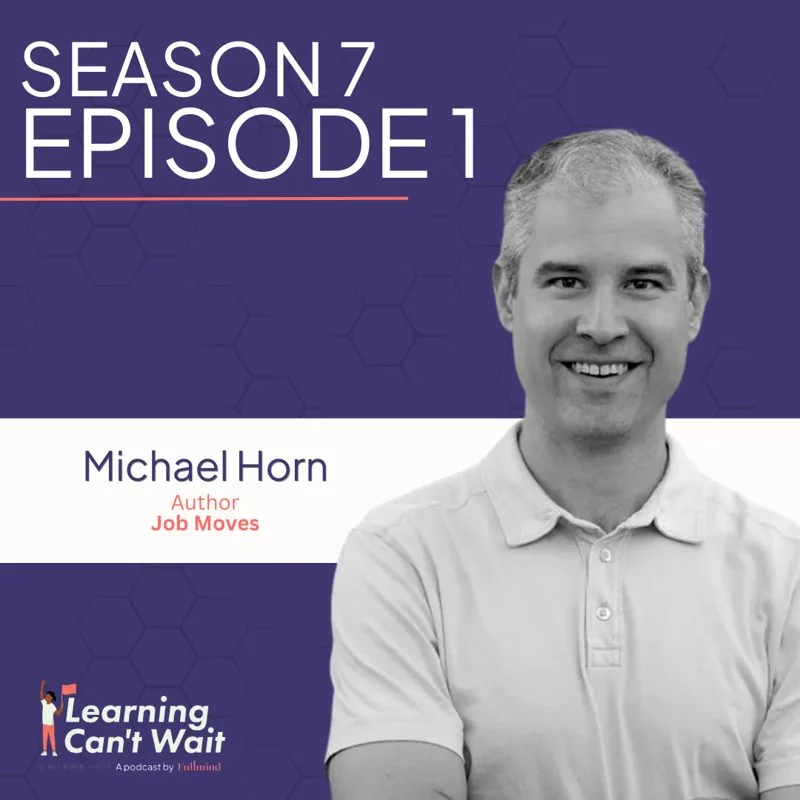
Michael Horn: Job Moves, Future of Education, Micro School Movement, Teacher Career Transitions
- Michael Horn
 Hosted by Hayley Spira-Bauer, Chief Academic Officer at Fullmind
Listen now
Michael Horn: Job Moves, Future of Education, Micro School Movement, Teacher Career Transitions
Episode summary
Michael Horn, co-founder of the Clayton Christensen Institute and author of Job Moves, assesses why K-12 schools returned to pre-pandemic models despite falling achievement. He argues schools were designed to sort students rather than optimize each child's learning, and points to bright spots: technology connecting students to great teachers anywhere, and the growth of micro schools that technology makes possible. Applying Job Moves to education, he explains why teachers leave for settings that let them work with kids, and advises leaders to make schools more permeable to the outside world.
Key takeaways
- Schools were built to sort students, not to optimize each child's learning, and that design persists
- Technology can connect any student to outstanding teachers and personalized content regardless of location
- Micro schools and learning at home could not exist at today's scale without technology
- Teachers leave because the job drains the energy that drew them in; many start micro schools
- High school should let students explore pathways; experiential learning keeps pace with a changing job market
About this episode
In this thought-provoking episode of Learning Can’t Wait, host Hayley Spira-Bauer sits down with Michael Horn, acclaimed author of Job Moves and a visionary in education innovation. Together, they dive into the transformative power of technology in education, from personalized learning tools to the growing micro school movement that’s reshaping how students learn and thrive. Michael shares both the opportunities and pitfalls of ed-tech, highlighting how schools can unlock its full potential to create meaningful, student-centered experiences.
Michael also brings fresh insights from Job Moves to the world of education, unpacking why the traditional career ladder mindset is out of sync with modern motivations—and what that means for educators and students alike. As they explore generational shifts in work culture and the future of learning, Hayley and Michael challenge school leaders to think beyond the classroom walls, making their schools more connected to the outside world. This episode is packed with actionable advice and big ideas for anyone passionate about transforming education and preparing students for a rapidly evolving future.
Episode notes
In a recent episode of the "Learning Can't Wait" podcast, host Hayley Spira-Bauer sat down with Michael Horn, an education thought leader and author, to explore these emerging trends and what they mean for students, teachers, and parents.
As more families and educators explore micro schools and new approaches to learning, having reliable access to experienced, certified teachers is essential. Fullmind can help bridge the gap, providing virtual staffing solutions that connect micro schools, learning pods, and traditional schools alike with high-quality, state-certified K–12 instructors for live, engaging instruction in any subject area.
The Rise of Micro Schools
Micro schools are gaining momentum as parents and educators seek more personalized, flexible options for students. These small-scale, community-focused schools leverage technology to connect students with high-quality, interactive content and caring educators—regardless of geography. Horn highlighted how tools like virtual tutoring and technology for diverse learners are enabling parents to consider micro schooling, even if they don't feel equipped to teach certain subjects themselves.
For many parents, micro schools represent a middle ground between traditional schooling and homeschooling. They offer a personalized approach to education while maintaining the benefits of social interaction and guidance from skilled teachers. Horn noted that these schools are flourishing in part because of technology, which empowers parents to provide their children with a tailored educational experience that was previously unattainable, while simultaneously creating new opportunities for educator empowerment in micro schools.
Challenges Facing Educational Technology
While the potential of educational technology is undeniable, its adoption in traditional schools remains limited. Horn pointed out that many schools fail to integrate technology effectively into their educational models. Instead of utilizing tools as a core part of a well-thought-out strategy, schools often purchase licenses for various programs without ensuring they are used meaningfully. This scattershot approach leaves the true potential of these tools largely untapped, highlighting the need for more innovative educational models like micro schools and educational reform.
The key, Horn emphasized, is to design models that prioritize active, personalized learning experiences for students. For example, programs like Zearn have shown promise when implemented correctly, offering targeted math instruction that adapts to each student's needs. This approach aligns with holistic education principles that focus on developing the whole child. However, success requires a commitment from schools to build time and support structures around these tools, ensuring that they are used to their full potential.
Educators Driving Change
Interestingly, many of the innovators behind micro schools are former public school educators who have chosen to leave the traditional system. Frustrated by bureaucracy and a lack of autonomy, these teachers are finding new ways to focus on what they love most: helping students learn and grow. Horn shared how these educators are reimagining the educational experience by creating environments that allow for deeper engagement and connection with students.
This shift also reflects a broader change in how careers are viewed. Horn’s book, Job Moves, explores how people’s motivations for work have evolved, focusing less on titles and salaries and more on fulfillment, autonomy, and opportunities for growth. Teachers leading the micro school movement are prime examples of this mindset, prioritizing their passion for teaching over traditional career paths.
Preparing Students for the Future
Another critical topic discussed in the podcast was the need to prepare students for a rapidly changing world. Horn and Spira-Bauer agreed that schools must shift their focus from rote learning to experiential, hands-on education that helps students discover their strengths and interests. This approach not only equips students with the skills they need for jobs that may not yet exist but also fosters a lifelong love of learning.
Horn emphasized the importance of making schools more permeable to the outside world. By exposing students to diverse experiences and perspectives, schools can help them build social capital and understand how their skills align with real-world opportunities. This kind of forward-thinking approach is crucial for both students and educators as they navigate the complexities of modern education.
A Call to Action
As Horn noted, the challenges in education today are significant, but so are the opportunities. Micro schools and personalized learning models offer a glimpse into a future where education is more adaptable, engaging, and effective for all students. However, realizing this vision will require schools, parents, and educators to embrace change and rethink traditional structures.
The conversation between Hayley Spira-Bauer and Michael Horn provides a valuable roadmap for those looking to make a difference in education. Whether you’re a parent exploring new options for your child or an educator seeking inspiration, their insights are a powerful reminder that learning truly can’t wait.
Full transcript
Transcript generated from the recording; minor errors may remain.
Hayley Spira-Bauer: Welcome to the Learning Can't Wait podcast of Fullmind. At Fullmind, our vision is to ensure every child has access to an exceptional education. Each episode, we will be joined by Pathfinders within and around the education space who are bringing about transformational change. On behalf of deserving students, I'm your host, Hayley Spira-Bauer. Welcome back everybody to the Learning Can't Wait podcast. I am thrilled to introduce you to today's guest, Michael Horn, the author of many bestselling books, but most recently Job Moves and the co-founder of the Clayton Christensen Institute. Welcome, Michael.
Michael Horn: Thanks so much for having me. You said you were excited about having me, but I've been excited to be on this since you reached out, so thank you.
Hayley Spira-Bauer: That is so kind of you for folks in education. Well, the most recent book may not be at the top of your list. I'm going to tell you why it should be while we're having this conversation because I've made a lot of connections to this work. But you may be really familiar with Michael and all of his authored books from other sectors. I pulled up a list as I was preparing for the interview because I was like, do I know all the books that Michael has written a dear? But there are some of them I hadn't heard of. I'll give you an example in just a second. But we have from Reopen to Reinvent, we have blended, we have Choosing College, we have the blended workbook, and then we have Disrupting Class, which you're very well known for. And then we have the Goodnight Box, which we had not heard of.
Michael Horn: Yes, that was a fun project my wife and I did together when we had newborns we're big fitness buffs or CrossFit cults, if you will. And so we thought there's a good night for every other sport or thing in the world after Goodnight Moon, let's do one for our kids around Goodnight Box and then decided to publish it.
Hayley Spira-Bauer: Love it. Love it. Well, maybe it's not your best known, but I did get a kick out of doing a little dive on the book because I had not considered that part of your repertoire. But let's actually, let's do the background here. Let's dive in a little bit starting with our first question, which is Michael, how did you come to be the personal and professional version of yourself?
Michael Horn: Yeah, so I mean by accident, I think as a lot of these things are for us, but I was deeply interested in public service writing and so forth. That had been my background. And then I went to business school, quite frankly to get away from the writing part of it, but I wanted to start new media businesses and parts of the world that didn't have access to free news media. And while there I took Clayton Christensen's class, the father of Disruptive Innovation, and he had this opportunity to co-author a book with him on public education. It sort of scratched an itch that was there and I signed up. And so we co-founded the Clayton Christensen Institute, the nonprofit think tank together while we were writing disrupting class. And then the original deal was it'll take a year to write, you will go out and I will help you find whatever job it is you want to do, Michael, it takes two years and in reality, you start the Christensen Institute, all of a sudden Gates Foundation and others are funding it. ([03:15](https://www.google.com/url?sa=E&q=https%3A%2F%2Fwww.rev.com%2Ftranscript-editor%2Fshared%2Flm2YfKdSr0QRWE4fB-AHVnGr1Wr14WEl4gsbRiGrqy30ae18jd2s8fS1DIuVz3jsKnhMnQNmO2BTg6Xu174MR0Sj618%3FloadFrom%3DDocumentDeeplink%26ts%3D195.25)): And I was like, this is the work I want to be doing. I wake up every day now thinking about how do we build a world in which all individuals can build their passion, fulfill their potential, and live a life of purpose. We aren't doing that so well in the US or anywhere. And so how do you do that? And of course, I left the Christensen Institute full-time in 2015, remained the board chair there. But just because I wanted to be able to work and partake in lots of different ways across the sector. So I teach at Harvard's Ed School now. I advise a lot of edtech companies. I sit on the board of some nonprofits in education and then obviously the most recent book is as I've gone up the stack, I started in K-12, but you realize pretty quickly that a lot of our high schools, what we think of as a good high school is that which gets its students into a good college. I personally have come to the belief that our colleges are sort of framed around the wrong sense of quality. We judge a good college to be that which keeps students out. I think a good college should be that which takes students regardless of their starting point and delivers them to great outcomes. And then you realize, well, that college system is somewhat dependent on the job market where a lot of people are floundering as well. So that sort of explains my upward drift over time, if you will.
Hayley Spira-Bauer: I love how you describe it as a drift when it feels very, very purposeful because when I think I often think about what is the through line for all these incredible people I get to talk to. And for me there's a level of introspection that you've applied to the work and the life that you live and the book Disrupting class and talking about what's going on here, what's broken is also a through line for your study and your approach to things. The world has changed a lot the last five years. We are always remiss if we don't talk about specifically K-12 education and the big changes that we anticipated but maybe never happened after the pandemic. How do you see your study in both disrupting class, even blended learning and from reopen to reinvent? How do you see that playing out today?
[05:00] **Michael Horn:** Yeah, it's such a good question. I think I didn't intend to write another book on K-12 education. I thought I'd sort of said my piece and then the pandemic hit. And as you know, Diane Tavenner and I started the Class Disrupted podcast. We felt like there's this moment parents, educators, they're clamoring for something different. We can really reinvent this. And that's what led the book. Let's not just think about reopening schools, let's think about reinventing. And so I quite like the book, sort of like all parts of me are in it, if that makes sense. As opposed to maybe disrupting class and blended, which I love for different reasons. But I guess I think if you look at it right now, you'd have to conclude that most kids are back in the experiences that they were in before the pandemic that we've not made nearly the progress that we wish we had. ([06:24](https://www.google.com/url?sa=E&q=https%3A%2F%2Fwww.rev.com%2Ftranscript-editor%2Fshared%2Fw3z8fIB9Maaid2lc452_c7aYZ3whcivx97qGiWf3aRf5abDwtZ5KHYUySq3hfV5fBCTDtXbvOabyI6H7TXOwjBHIxfw%3FloadFrom%3DDocumentDeeplink%26ts%3D384.26)): I think the positives are, we've had a real good conversation about reading in this country since then. That's great. We've made some real strides forward there and many states, I view the emergence of education savings accounts that are giving all kinds of choice to families as an incredibly important thing. The rise of micro schools, which I had been writing about for years before is obviously in a much bigger place. You've covered this on the podcast. I think that's a really big positive and creates the opportunity for some pressure, if you will, on the traditional system to maybe break out of its one size fits none ways. But despite that, if you go into a lot of public school classrooms, unfortunately across America right now, a lot of disengaged kids, a lot of chronically absent kids who aren't even there. And I think we haven't made the strides that we need to. ([07:21](https://www.google.com/url?sa=E&q=https%3A%2F%2Fwww.rev.com%2Ftranscript-editor%2Fshared%2FhuuE-Qmr0FwaRyQ_RMYdYlrUtnkF-ZJEFhVZ136_IUColaroRkQgQ5Fh9lU5mOYigWq2bUEFywiD4mS7lpLo7zU8_Jw%3FloadFrom%3DDocumentDeeplink%26ts%3D441.2)): So I guess I would say I'm frustrated in some ways, but there's these glimmers of optimism on the fringes that I think portend bigger innovations to come that I'm excited about and I hope that that actually comes through. Disrupting class was written at a time where we were like, okay, we're going to use technology to reform within. There were some challenges with that that I think we wrote about in the book at that time, but we hoped would get glossed over and haven't really, and then blended, I think similar. And then from reopen to reinvent, I think it's sort of like a, Hey guys, this is what you got to do. Otherwise, actually I think these new things bubbling up from outside the system are maybe where we ought to go as a country.
Hayley Spira-Bauer: So just to add a fine point to what you're saying about, Hey, we haven't arrived. We are in the same place. We're actually in some cases in a worse off place. I just read the trends in international mathematics and science study that came out two days ago and our eighth grade math scores plummeted 27 points since 2019. I try not to be alarmist about these topics we talk about on the podcast, but at the same time we should be alarmed and we should be thinking, well, if we keep doing the same things over and over again, why are we expecting different results?
Michael Horn: I think that's the big thing. So that's the through line of all the work, which is thatthe schools we have were designed to do exactly what they do.They not built around teaching and learning. I remember, sorry, this is taking you in the way back machine, but when I started working with Clay Christensen, my brother was actually a speech writer at the Department of Education and I called him up. He was sort of a sounding board as I was going through research and stuff, and I was like, I kind of feel like schools were never built for teaching and learning. And he was like, that's the dumbest thing I've ever heard. And I was like, no, let me take you through the history here. Yes, they do teaching and learning, but they were not built to optimize each kid's learning. The design feature of students dropping out before high school was actually a feature of the system because it was trying to sort the precious few who would go to college, which was reserved for a very small minority. ([09:41](https://www.google.com/url?sa=E&q=https%3A%2F%2Fwww.rev.com%2Ftranscript-editor%2Fshared%2FmcF-G1KOmFoIu2r2K_DEezwiPVRnZM4aWGUO9v5as5eoRqkbQ1V-UGQwMDTlnfAE7x5uuJUISbELoWM3nzClpHMF8rk%3FloadFrom%3DDocumentDeeplink%26ts%3D581.49)): If you go back and read Thomas Jefferson's writings, this was his hope that we would've this three tier system that would spit kids out at various intervals into their sort of destined career path works great until the 1970s. Why? Because you can get great middle class jobs without college education late 1970s hit. When we start to move into the knowledge economy, technology, automation, globalization, that is no longer the case and yet we still run the same system. And so to your point, then you throw the pandemic on it, then you throw the disengagement on it, we haven't changed a thing and we're expecting something different. Well, of course you're going to get the decline. Students are in very different circumstances. They're asking, what's the point? Parents are starting to say, I actually don't believe this expensive college thing that gets mediocre results at best and seems to have a lot of debt. And so it's sort of unfolding on itself while we're still running the same playbook. And to your point, I mean it's nothing short of tragic in many of these communities what these students are not getting in terms of math and literacy fluency or frankly a basic understanding of how the country works and civics and things of that nature.
[10:00] **Hayley Spira-Bauer:** To combine a couple of your writings, and really this is the work I do today at Fullmind, so full candor, this is my disclosure here, but we talk about what's happening with student performance. So we have a problem. We've identified that students emotionally are not well academically, are not well, and then we talk about how not everybody has access to a great teacher. In your book Job Moves, there's a big talk about the impact of the great resignation, and we see that trend repeated in schools as well. At the beginning of the school year, this past year, 86% of schools struggled to find teachers. Now, it doesn't mean that they ultimately started the school year without teachers, but it meant that they struggled to find the necessary teachers. And when I think about your work on technology and blended learning specifically in the book blended, there is an obvious answer here and it's the reason I do the work I do. So can you talk us through a little bit? That's my bright spot, but going back to your comment, you said there are bright spots around the edges. What are your bright spots in K-12 education today?
Michael Horn: Yeah, well, I think one of them is yours as well, which is the capacity of technology to connect a student regardless of zip code to not just great interactive content. And I say interactive because active learning is what we have to get toward that away from passive, but to actual real human beings who are incredibly caring and outstanding at what they do regardless of where they live. And three, to make it personalized at the right level for the kids so that they're making the progress that they need in the language that's going to speak to them and understand like, Hey, where are you today? Okay, let's back off this and lean into that sort of the great things that Montessori education does and has been doing for over a hundred years at this point. And so I think that's a real bright spot. The negative of that is that we know that there's these amazing tools that only get like 5% usage or so in schools. ([13:04](https://www.google.com/url?sa=E&q=https%3A%2F%2Fwww.rev.com%2Ftranscript-editor%2Fshared%2Fm_lb32buxN2ISM_9PeCX0e9Kjxo1L6Orv3kmsK5d7cFvRMRB4W8fiFjISqDwuvltlynld4rApY8RsraqUoyTvta_gVs%3FloadFrom%3DDocumentDeeplink%26ts%3D784.9)): And I think the reason for that, there's many reasons for that, but one of them is I think schools consistently forget you have to set up the right model and then use the technology as a tool, as an integral part of that model to make sure you're reaching each student as opposed to, oh, I've got 30 licenses to different things and we're just going to hope that something good happens. Well, of course you're not then dutifully making sure that we're actually following things in the right prescription and time. We haven't built the time for kids to really engage meaningfully with a tutor with a great math program like Zearn, whatever it might be. And so I named the bright spot and then the negative, I'll go back to a bright spot though. I think these tools and technologies are really the things that are actually undergirding the explosion of the micro school movement.It's pretty clear to me that homeschooling, micro schooling, virtual schooling, whatever, they could not exist in the numbers that they do right now without technology.([14:13](https://www.google.com/url?sa=E&q=https%3A%2F%2Fwww.rev.com%2Ftranscript-editor%2Fshared%2FfBa2dhPgDG41z-P9tCnraEbiFgbuqN1bvkt_olvf7x6UZHx7hlJkdd4M6Q4D4_yQk-_au54uSPRymFivrkHO15DeXt0%3FloadFrom%3DDocumentDeeplink%26ts%3D853.06)): And it means that the parent who's like my kid's really getting bullied in school, I think I want to homeschool them, but the problem is I was never great at history or social studies, and so I just don't feel comfortable. Well, that's okay because now, right, I can connect you to an expert online. And so micro schools love my kids. I want them to have a personalized experience, but I work, I don't want them at home with me all the time, even as we record this. One is because she's sick, but by and large. And so micro schools are an incredible asset where we still get that caring adult in person with other kids where they can have fun. Maybe I can't provide that experience. So I think there's this flourishing underbelly of really engaging very interesting things that are actually gaining steam, and we just haven't seen everyone put them together yet in ways that increase access with more uniformity to the right experience at the right time for the right student.
[15:00] **Hayley Spira-Bauer:** It's interesting to hear you speak about the surge of different types of schooling, and I want to actually connect that to your new book, and here's how I see the connection. Parents are frustrated, guardians are frustrated, and in schools, teachers are burnt out and tired. And so we have a system that you and I both agree is broken and maybe built to be this way, as you say, which I agree with, and also is continually failing kids. And the people, the stakeholders who are basically the customers of that system are unhappy and they're not buying it anymore.
Michael Horn: Buying, yeah, they're opting out. Yep.
Hayley Spira-Bauer: I do want you to be able to talk about the purpose of job moves in society and why you wrote it, but I'm going to make you just jump right ahead. How does job moves and the thesis of that book apply to what we're seeing in school today?
Michael Horn: Today? Yeah, I am glad you asked this. I've Crosswalked job moves to what it means for preparing K-12 students with some folks, but I haven't done what you just asked, so this is going to be fun to do together. Let's do it. Yeah, yeah, no, let's do it. So I think the real point is this, which is that we have built a world of careers that is premised on the idea that people are constantly motivated by more money and bigger titles and progression, if you will, up a career ladder. The reality is for at least the last 25 years, frankly probably longer, but it's become a majority over the last 25 years, that is not in fact why people make switches in their careers or take the jobs that they do. But we have this world that is aligned around sort of this, I would call it a supply side version of the world, this career ladder mindset that is at odds with the progress that individuals are seeking. ([17:24](https://www.google.com/url?sa=E&q=https%3A%2F%2Fwww.rev.com%2Ftranscript-editor%2Fshared%2FqjZPX_lbCZkqIHlcaGBS1hWHEA6oSUfqw4dCPKWbsr6yL0bed9C5Z6XMBupuSlRJZNbjbueYtDQdYVEOtnRQcst6v-M%3FloadFrom%3DDocumentDeeplink%26ts%3D1044.02)): And what we know and have known for decades is that what motivates individuals to be awesome at their job and to really stick with it, like the hygiene factors, pay title, all that stuff that's not unimportant, but it only makes someone not dissatisfied. The real important stuff is the things of opportunities for growth on the job, opportunities for autonomy in taking ownership, the ability to not be micromanaged for many individuals, the ability to be recognized by your peers for great work, things of that nature, that the work itself is intrinsically motivating and you realize that just paint the picture. You're a teacher, some number of your kids aren't even showing up. Some number of your families are constantly yelling at you for all the things that you should be doing or haven't done. You're incredibly overburdened by administrative details and work and frankly worries that if you say the wrong thing at the wrong time, that you might get hauled in front of whatever. ([18:33](https://www.google.com/url?sa=E&q=https%3A%2F%2Fwww.rev.com%2Ftranscript-editor%2Fshared%2F0JEaUYNuUWVMNPYnHigaaQ36sJysh2rX95XhNNE9VCRH5vyhH6S99XzKxfUOLPrA0_GYFM4j01sd0HVi1LcZujPesMI%3FloadFrom%3DDocumentDeeplink%26ts%3D1113.57)): And so you're sitting there working harder and harder and harder at a job that is giving you less and less time for the things that probably brought you into the profession in the first place, which was to help kids make progress, very simply put. And so I think that may be the central disconnect, right, in the teaching profession as well, which is like we've built this world that is at odds with the progress that the individuals want to make. And I think the big argument of the book is we've actually, a individuals get to hire their next job just as much as the companies or schools are hiring them. B, that means you really have to understand what progress looks like for you, and that is different from progression. And three, if that's all true, I think it helps to explain why so many educators right now aren't just opting out of the system, but in many cases, actually they're the ones creating the micro schools. ([19:38](https://www.google.com/url?sa=E&q=https%3A%2F%2Fwww.rev.com%2Ftranscript-editor%2Fshared%2FjCOUjCk8y7AiudajOB8DdaoGekWyi4H5OiduLrZvuybePPcCxW4Qg2N0FgwhhIL_hYZ62mTiLOzONHJK__2nqU3AsnQ%3FloadFrom%3DDocumentDeeplink%26ts%3D1178.4)): Like, heck, what the bureaucracy? I just want to be heads down with a small group of families teaching, doing the work, getting into it. If I do it this way, I get to do the stuff I love and get out of the stuff that drains my energy. And so a big piece of the book is helping people really discover what drives your energy, what drains it, what is most important to you now for your career, and then what are the capabilities that you bring to work today and that you want to be known for in the future? And what does it take for you to develop those capabilities and how do you start prototyping different job futures for yourself that envision you being able to lean in and get that? And what trade-offs are you willing to make to get that future? I think a lot of educators are actually sort of doing this somewhat subconsciously at the moment as they, to your point, either leave teaching completely or actually leave traditional schools and start their own. Because I think what we know is a lot of these entrepreneurs behind these micro schools, they are former public school educators, they are teachers, and frankly, they don't necessarily want to be doing business. They just wanted more time to work with kids.
[20:00] **Hayley Spira-Bauer:** The elements of the book that really resonate with me are just how human we all are, and you mentioned at the top of your answer here that there is a divergence from just wanting money, which is also a human to fulfill Maslow's hierarchy needs and
Michael Horn: All the, we need that baseline,
Hayley Spira-Bauer: We need it, but really to feel satisfied. I wonder, this is a little bit of a departure, but now I'm just curious. There's a trope right now about this current generation and how they approach work. Talk to us about how this current generation, this youngest generation, gen Z, and then there's another one below it, which I'm forgetting what we call them, how they approach work and how that differs from elder populations of employees.
Michael Horn: Yeah, there's the millennial, gen Z gen alpha or something like that. Yes, that's it. Thank you. So I will say I'm sometimes a skeptic on the generational differences to some degree because I think there's a very clear pattern throughout our history of every older generation complaining about the newer one. ([22:05](https://www.google.com/url?sa=E&q=https%3A%2F%2Fwww.rev.com%2Ftranscript-editor%2Fshared%2FD90gr4YaeNOFiJRWRpIzVsdRLMCGgNaCsdPlQrY8nhHBxF5CcjtwUyemdyzRjANhQxy-Kvrf3B5jRfbrbBDf3d3oZkw%3FloadFrom%3DDocumentDeeplink%26ts%3D1325.26)): Sure. That said, I think a few things are true. Number one, this generation as they come into the workforce is switching jobs more frequently than ever before average across everyone in the United States right now is every four years. The current generations when you're younger at least, is more frequent than that. So already we have a big departure from teaching, by the way, which historically we assumed you went in the classroom and you sort of stayed in the classroom unless you became an administrator, and these were lifelong careers with pensions and the like. So you have divergence there. Number two, you have divergence, I think from past because the rate of depreciation of skills in the workforce is faster than we've ever seen. So technology is changing how we do work. The technical skills to do jobs are changing faster than ever before. So that means the assets that I have as an individual and when I come into a role, the learning and upskilling that I have to constantly be doing as an adult, arguably lifelong learning was always important, but now it's existential in some ways. And so by the way, that's a great thing I think for education in the long run.
Hayley Spira-Bauer: Yes. Well, and your book I feel like should be read by high school administrators, right? Because right now you have this population. Some people disagree with this. I've had some guests on the podcast who don't agree with this statement, so let's hear your thoughts are, but
Michael Horn: Okay, go for it.
Hayley Spira-Bauer: I think some schools right now are educating kids for careers that don't exist yet.
Michael Horn: Oh, I agree. I agree. And I think the argument probably against that is, well, the foundation is still pretty important because blah, blah, blah, blah, blah. My simplistic brain on this is that the K through eight curriculum is probably pretty core still, and that when we get into high school, actually the job, maybe even middle school, but certainly high school, the job should be like letting students go down lots of different pathways and exploring what is out there. Not because they're trying to get the job, it's changing too quick for that to be relevant, but more so that they build clear understanding of this is what I really like doing. This is how I'm really good at doing this is how the world values those sorts of skills and how I can contribute in meaningful ways. We don't build that understanding at the moment. And frankly, to your point, the world of work is changing so fast that I don't believe we can codify it in a textbook that it's best. ([24:51](https://www.google.com/url?sa=E&q=https%3A%2F%2Fwww.rev.com%2Ftranscript-editor%2Fshared%2FJfm9OSTd72nEPxmjwYtfRYWPqHhCNKkS6BTUFF_xdEoJIsEIwrIGXCJuI2VZ6g1CYqUgYV4xkYyBXog4yzrYqBele5Y%3FloadFrom%3DDocumentDeeplink%26ts%3D1491.71)): I've become a much bigger believer in experiential learning because I don't see any other way to keep up with it. And so yes, I think to what you're saying, the third piece I think that's really interesting about this then with the younger generation is, and just put yourself in their shoes. If you're constantly being told your skillset is depreciating faster than ever, you would probably be pretty impatient also as an employee because you're feeling like, oh my God, I got to make impact now or else. And so in some sense, the big wrap on the younger generation is they're so impatient, they want to run it yesterday, they don't have the actual wisdom, shall we say, to do these things. Fair. But there are real reasons I think that that is happening that are actually much more structural than maybe we have acknowledged. And so in some ways, I hope the book gives people a language on both sides of the equation to say, okay, what are you really asking for to the individual who's impatient and whatever, and for that individual to perhaps better express themselves so that you realize, oh, that's what you want. ([26:06](https://www.google.com/url?sa=E&q=https%3A%2F%2Fwww.rev.com%2Ftranscript-editor%2Fshared%2FQC-73rUZevUm1WZ0r9j18HSnP5-_p0XqErHnsT_3y9RbHHhLbBNf1HiBXhncCSURkJPQYD7m1YFX0ZSSkHz7kjCw9R8%3FloadFrom%3DDocumentDeeplink%26ts%3D1566.32)): That's what self-actualization, we can do that. But when you asked it the other way with the room controlled temperature and run the school yesterday, no, that's not how it's going to work. But like, oh, you wanted to stretch assignments so that you could grow more. Yeah, we'd love you to do that because this has been unfilled and you wanted it to be in this area because it's a curiosity. Great, go run. Right? But I think we haven't had that language to realize some of the asks are smaller than we thought, but have not been as articulate perhaps as they could be.
[25:00] **Hayley Spira-Bauer:** Michael, you just now, for us, for the first time, brought job moves to the education sector and I think did a really beautiful job of addressing what schools are contending with right now, both in the challenges they face, the structural issues, but also looking forward and helping to equip students through the work that you've done on job moves for future satisfaction and happiness in their work. As a final question, I would just ask you, keeping this framework in mind of job moves, what advice would you give a school leader starting their career today?
Michael Horn: Oh boy. For a school leader, I think my big advice would bemake sure that you are making your school more permeable to the outside world than perhaps we have historically thought about it.And what I mean by that is a lot of times I think historically schools were sort of, you shut the door of your classroom, you shut the door of the school building, and I get their safety worries That sort of dictate some of that because we're trying to protect the embryonic childhood, if you will, of kids. But I think for you as a leader and for your kids to develop the interaction with the outside world and the outside world, outside of their immediate community, to realize what is possible to them is so critical for the teaching and learning to keep it up to date for your own ability to stay on top of what is going on and what is important and valued and frankly, to help your kids and you build social capital with the world outside so that they can learn how to develop relationships with lots of different people from different parts of life that will help them realize how important this lifelong learning endeavor is so that they're not just checking a box to graduate, but that they are entering the world as curious individuals knowing that they can talk to people and learn constantly.
Hayley Spira-Bauer: That is a new one, and I love it. Michael Horn, this has been such an honor to have you on the podcast. Thank you for coming and spending time with us today.
Michael Horn: Thank you for pushing me in some ways that I hadn't thought about yet, so this was really fun. Thank
Hayley Spira-Bauer: You. I'm so glad you joined us, and thank you to everybody who tuned in today. Thanks for listening to the Learning Can't Wait podcast. If you like what you heard, please rate, review and share this episode. Be the first to know when we have a new episode by subscribing wherever you listen to podcasts. If you'd like to be a guest on the show or have a suggestion for an episode, email us at podcast Fullmind Learning.